In this glossary, the concepts will be disclosed with examples of each constructive term and urban image seen throughout the classes.
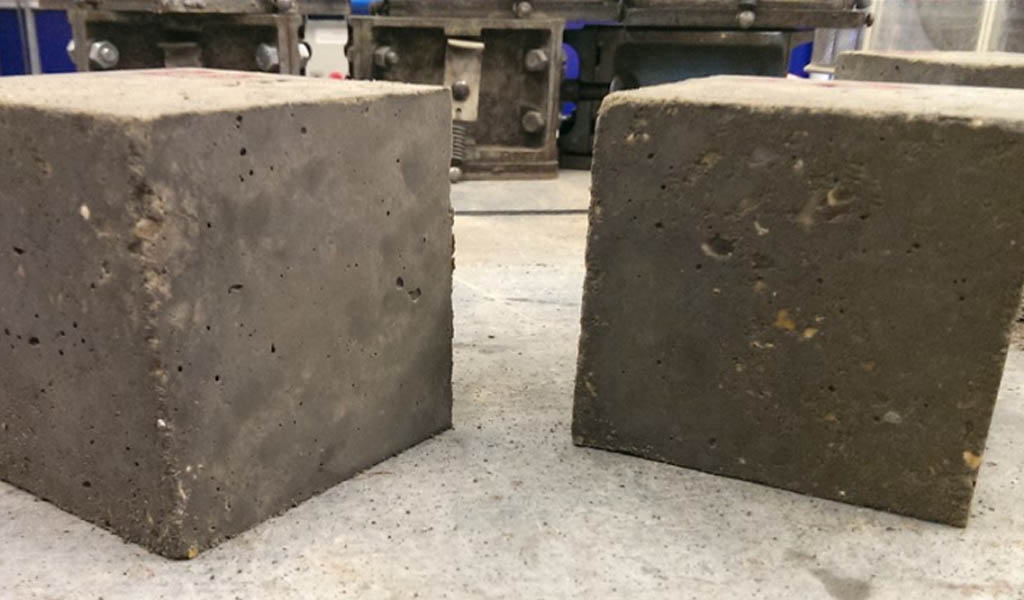
Air-entrained concrete
Noun
The air included in the concrete is dispersed in the form of tiny spherical bubbles, connected to each other only by very small channels called pores, through which the water escapes during the drying of the concrete and after curing.
Example: It is recommended for almost all concrete, primarily to improve the freeze-thaw resistance of concrete exposed to water and deicers.
es: Concreto con aire incluido
Architectural concrete
Noun
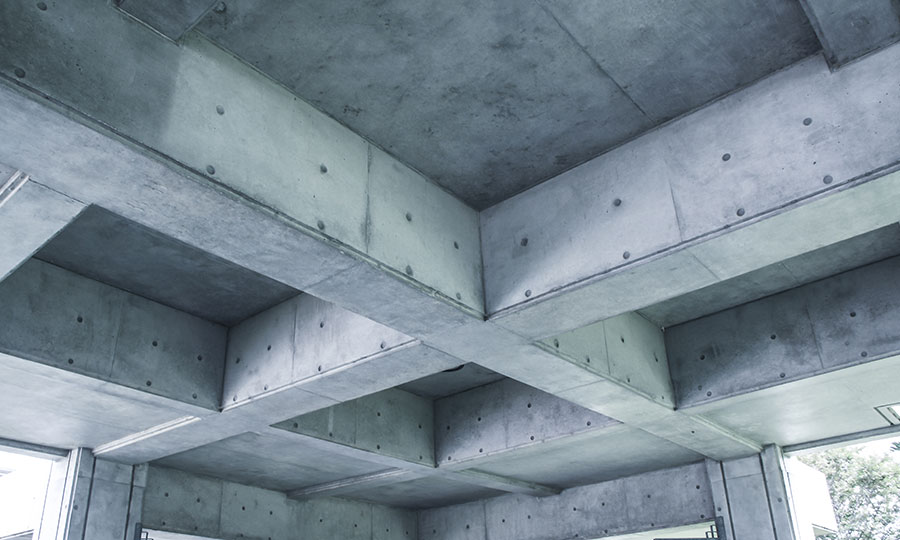
It is a material that, in addition to complying with structural and mechanical specifications, offers the possibility of giving personality to a work, combining pigments with additives to achieve different shades, textures, shapes and visible finishes.
Example: The Bauhaus School uses architectural concrete to provide elegance and continue innovating.
es: Concreto arquitectónico
Asphaltic concrete
Noun
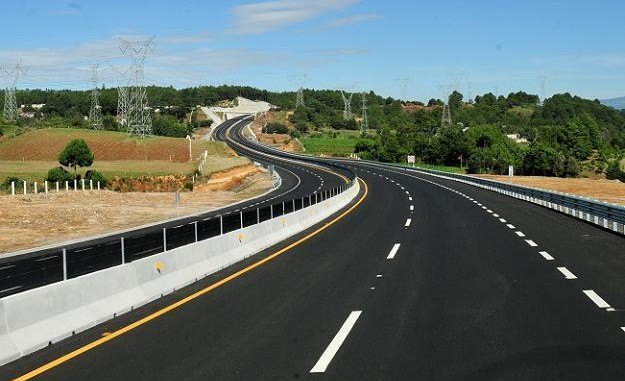
Refers to the material obtained through the oil refining process in which volatiles and part of their oils are eliminated, obtaining a viscous, impermeable, thermoplastic material that is highly adherent to stone materials
Example: The roads are made of asphalt concrete.
es: Concreto asfáltico
Axis
Noun
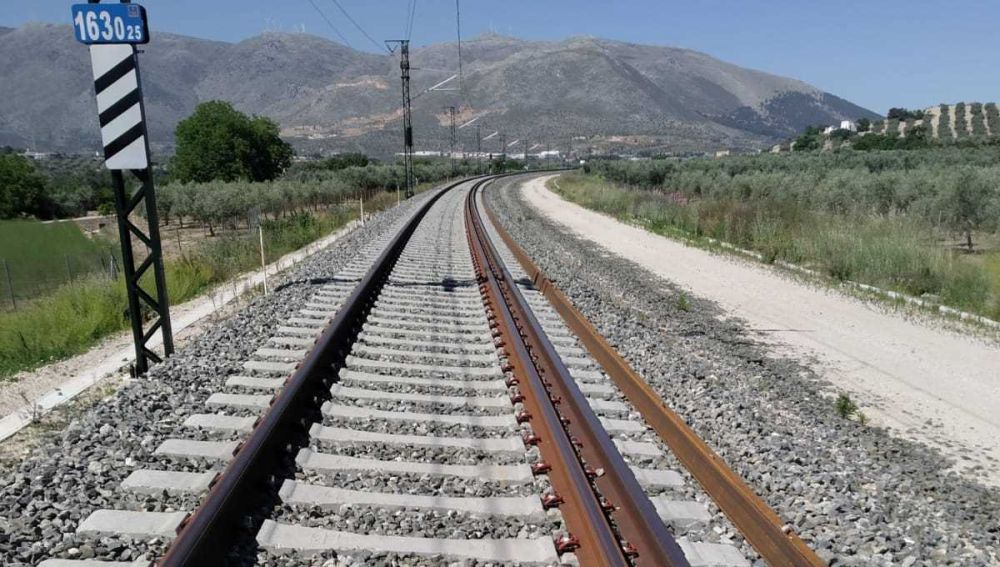
It is a straight line that joins two points in which spaces and forms can be organized in a regular way, in addition to the fact that it induces the appearance of different perspectives along the route, said line can be invisible or imaginary.
Example: The tracks of a train are an axis that is present and separates a space in two.
es: Eje
Backup wall
Noun
The structural backup of the building system is designed to support floor and roof loads and to resist lateral wind loads and seismic movement. The exterior veneer is not structural and is connected to the structural backup via wall ties and transfers some wind load to the backup.
Example: A reinforced solid brick masonry with two or more faces can function as a structural support, although this is a rare type of construction.
es: Pared de respaldo
Borders
Noun
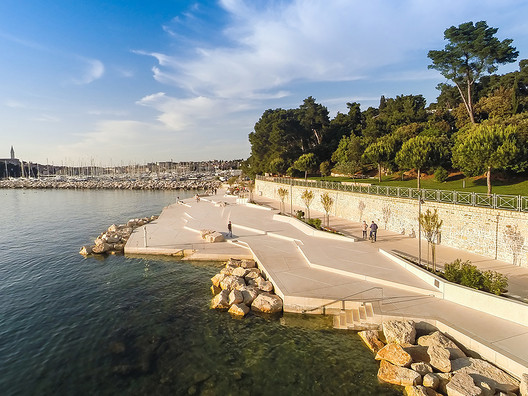
They are insurmountable limits, whether natural or artificial, that limit the day-to-day life of those who live next to them.
Example: The sea would be a natural border because it limits the land area
es: Bordes
Brick courses
Noun
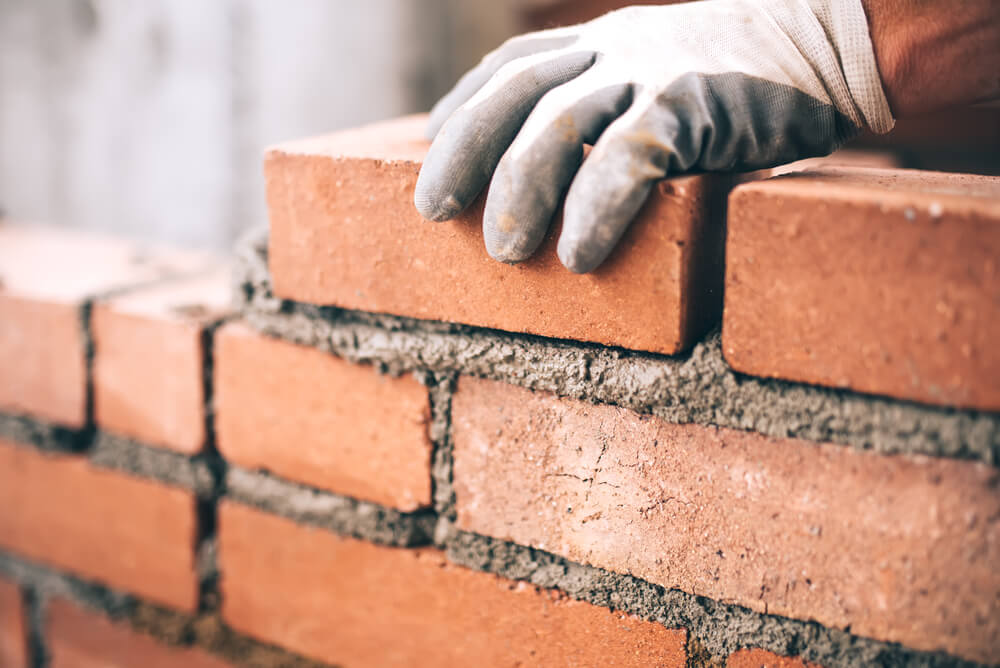
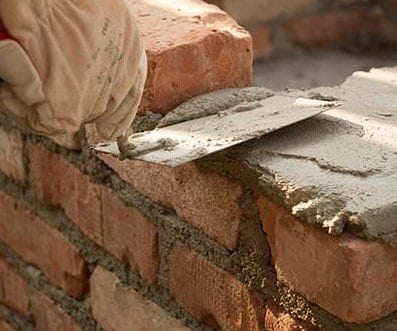
It is the masonry process, that is, the consecutive arrangement of bricks or any masonry material.
Example: When you build a wall you are making rows of bricks.
es: Hileras de ladrillos
Brick veneer
Adjective
It is a layer, coating or apparent finish that is given to a wall.
Example: A brick lining is placed on a fireplace to give a rustic appearance
es: Revestimiento de ladrillos
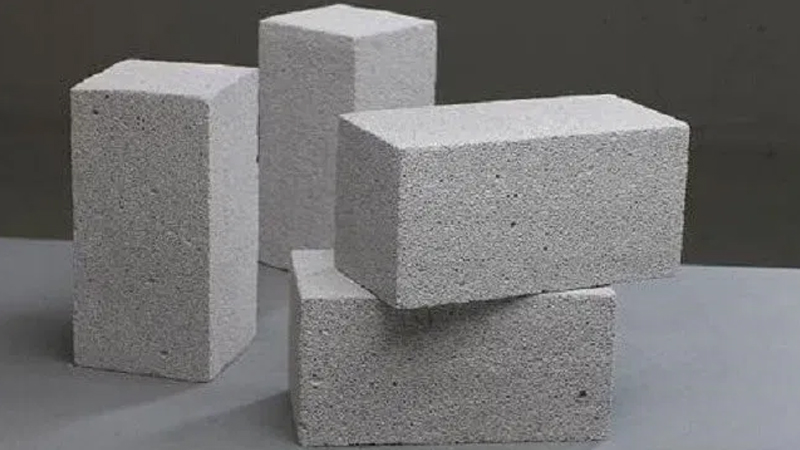
Cellular concrete
Noun
Cellular concrete is a special type of lightweight construction material that is produced in the form of blocks or panels used for the construction of residential or commercial buildings.
Example: Cellular concrete blocks are very light.
es: Concreto celular
Colored concrete:
Noun
Concrete whose formulation includes pigments based on metal oxides, obtaining a uniform color throughout the mass of the concrete.
Example: Used on footpaths.
es: Concreto coloreado
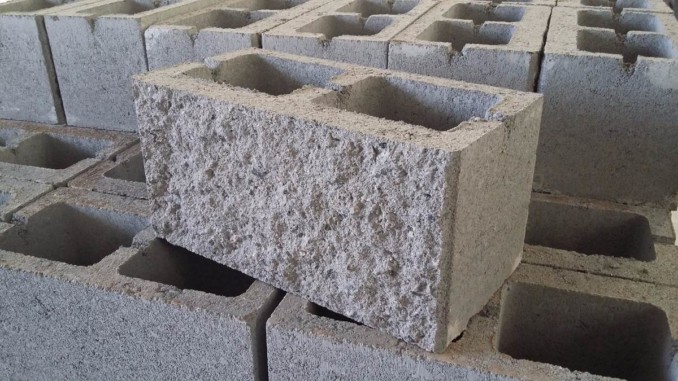
Concrete block:
Noun
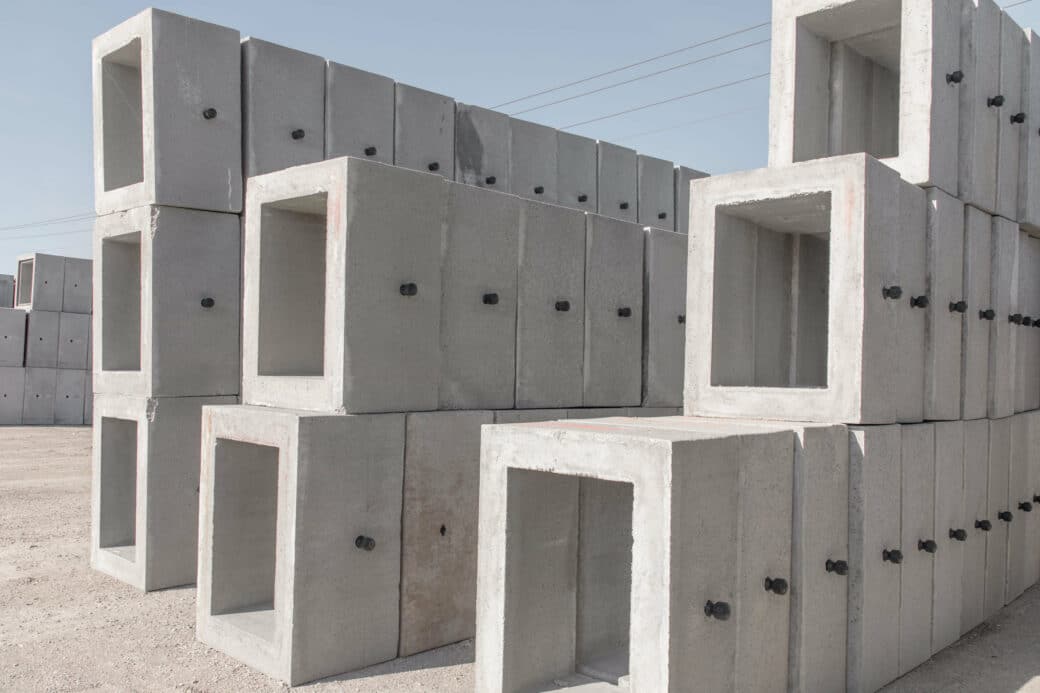
A concrete block is a prefabricated masonry, made with fine concrete or cement mortar, used in the construction of walls and walls.
Example: The walls of the houses are made of concrete blocks.
es: Bloque de concreto
Cured concrete
Noun
It is the process by which concrete made with hydraulic cement matures and hardens over time, as a consequence of the continuous hydration of the cement in the presence of sufficient amounts of water and heat.
Example: Wet decks.
es: Concreto curado
Dovetail insert
Noun
It is a mounting system of two boards, the ends of the boards are carved making a notch. These teeth will be trapezoidal in shape, with the outside wider than the boot.
Example: the dovetail can be used in more precise and simpler assemblies
es: Inserto de cola de milano
Exposed concrete
Noun
It is the finish of the concrete element after stripping, removing burrs and some imperfections without much additional work.
Example: Rustic finish.
es: Concreto expuesto
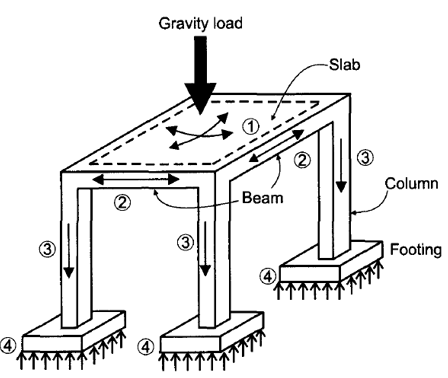
Gravity load
Noun
Loads acting on a structure as a result of the action of gravity.
Example: Gravity load affects deforming a slab.
es: Carga de gravedad
Green concrete
Noun
It is defined as the cement that uses waste materials, respectful with the environment, that improves the 3 pillars of sustainability: the environment, the economy and the social climate.
Example: Sustainable concrete, concrete blocks with disposable materials.
es: Concreto verde
Hanging off
Action
Is when an element is suspended in the air attached to another element
Example: A lamp is hanging from the ceiling.
es: Colgando de
Horizontals mortar joints
Noun
Joint is called the small space between the two surfaces of the immediate bricks of a wall, which is filled with mortar or cement in order to join them solidly.
Example: A brick wall is joined with mortar, creating a gap or sink depending on the tool used.
es: Juntas horizontales de mortero
Insulating concrete
Noun
Is a white building (thermal) insulating material, which is obtained through a mixture that, when reacted, generates the formation of millions of air bubbles inside the mass.
Example: Cement block, siliceous sand, lime, water, incorporating an expansive agent, aluminum powder, at the end of the kneading process.
es: Concreto aislante
Ladders type systems
Noun
System in which stones or ladder-type rubble are anchored
Example: This can be seen as a coating that does not have a specific order but looks good.
es: Sistema tipo escalera
Landmark
Noun
They are landmarks that are recognized by everyone on a site, they are elements that are seen, and unlike nodes, they cannot be penetrated.
Example: The dancing dogs of Colima.
es: Hito
Laterally
Adverb
Is the accommodation of a person or object that does not come in a straight direction.
Example: It could be the position of a view of a house, side facade.
es: Lateralmente
Masonry ties
Noun
Are ties used to connect multiple masonry walls
Example: Metal element that holds together 2 walls of different material.
es: Lazos de albañilería
Metal channel
Noun
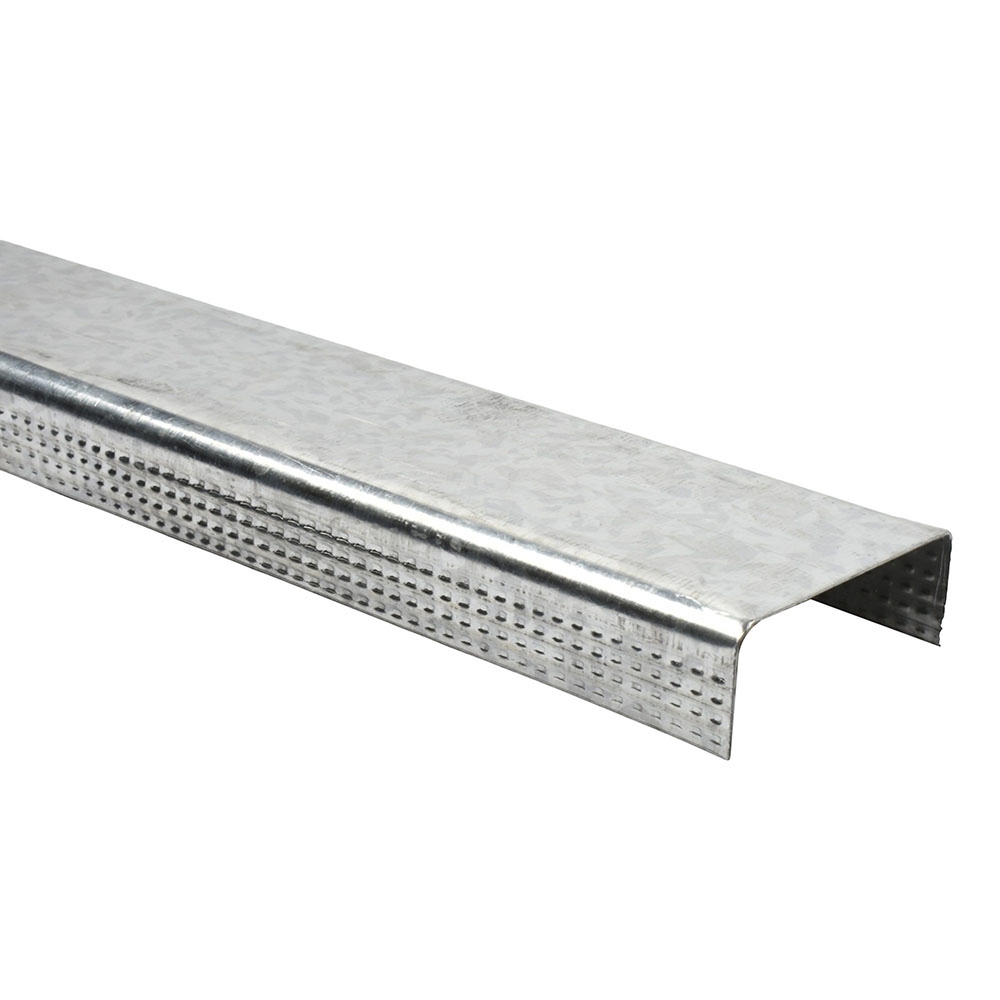
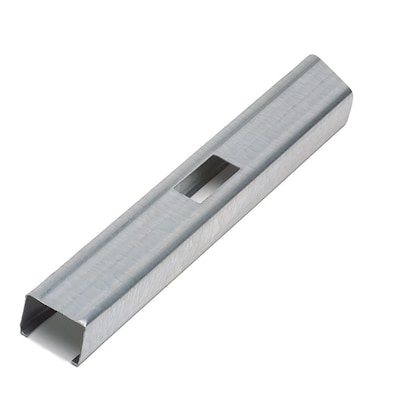
It is a metallic structure whose manufacture is made with galvanized sheet. They are also known by the name of "metal profiles".
Example: It is used in walls of structures such as garage.
es: Canal metálico
Metal decking
Noun
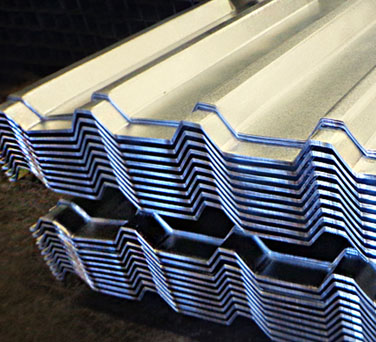
Corrugated sheet is a galvanized structural element which is used as covers.
Example: Most often it is covered with concrete to form floor or ceiling slabs.
es: Plataforma de metal
Metal framing
Noun
Metal framing generally refers to cold-formed, light-gauge studs, channels, and other shapes.
Example: Stadiums, bridges and some monuments are structures made of metal.
es: Estructura de acero
Metal grating
Noun
The steel grid is a reticular structure made up of load-bearing slabs joined orthogonally by transverse elements.
Example: In the streets you can find metal grids, they are placed in spaces so that rainwater drains and the streets are not flooded.
es: Rejilla metálica
Metal panel
Noun
The metal panel is a general term describing any flat, thin sheet of metal. It can be any type of metal.
Example: It can be any type of metal (stainless steel, aluminum, titanium, etc.), it is used in structures and also as coatings.
es: Panel metálico
Metal rod
Noun
It is a metal bar that is used for the construction of internal structures in buildings.
Example: Metal rods can be seen in reinforcements such as castles, concrete dalas, etc.
es: Varilla de metal
Metal roofing
Noun
They are metal structures that protect or cover objects or people.
Example: the ceilings of a cafeteria or a roof.
es: Techo de metal
Metal stud
Noun
Are structural elements used to place and stabilize walls.
Example: They are observed in the dividing walls of the houses of the USA.
es: Perno de metal
Metal tubing
Noun
Hollow sections are a round, rectangular or square section of steel, which has a structural use.
Example: It is used in the structural and industrial field.
es: Tubería metálica
Multi-story
Adjective
is used when you express a building as it is an adjective since it describes an inaccurate number of floors.
Example: All modern buildings are multi-storey
es: De varios pisos
Node
Noun
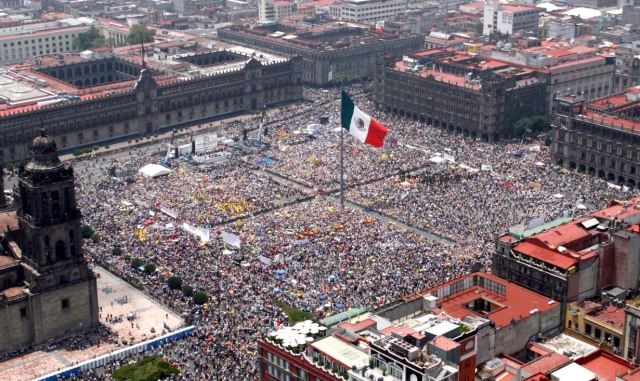
They are the most common meeting points in our neighborhoods and surroundings.
Example: The Zocalo of Mexico City
es: Nodo
Plot
Noun
The plot is made up of a regular pattern of dots that define inserts, that is, it is made up of constant dots and lines that share one or more things in common.
Example: The design of a window and its repetition imply the formation of a plot.
es: Trama
Porous concrete
Noun
it is a type of pavement with a porous surface that is made up of concrete, it is also considered a green pavement, it allows water to run through it instead of accumulating or leaving it.
Example: It is used on platforms, pedestrian paths, etc.
es: Concreto poroso
Precast concrete
Noun
Refers to the placement of concrete in some location other than its final position in the structure, usually in a story.
Example: Concrete panels that can be easily assembled.
es: Concreto prefabricado
Prestressed concrete
Noun
It is a technique that is carried out by tightening steel before placing the concrete to be worked on.
Example: Prestressed concrete is used in beams to reinforce structures
es: Concreto pretensado
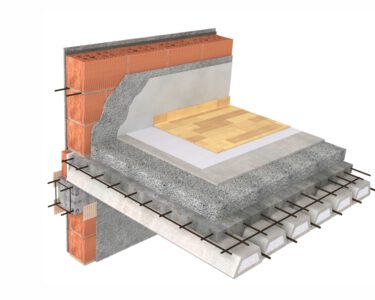
Reinforced concrete
Noun
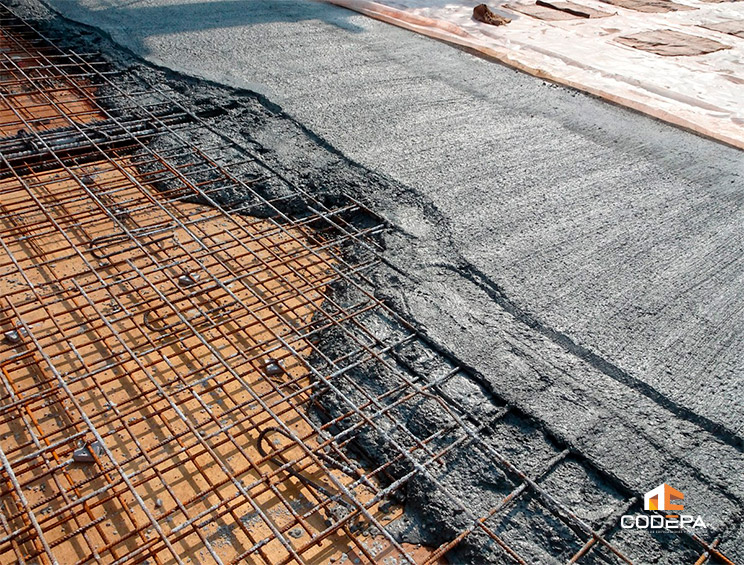
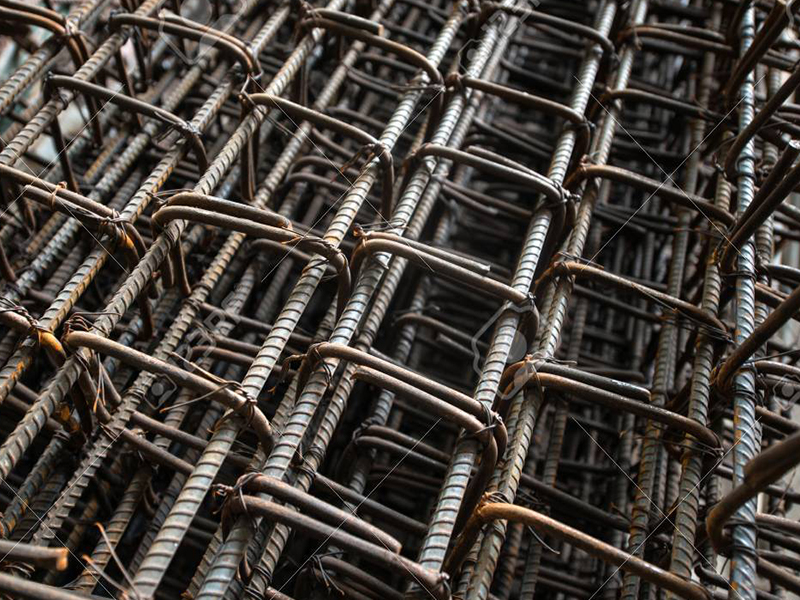
It is a composite material that conventionally results from the incorporation of steel bars or meshes in the concrete mass. In other words, it is a concrete that has internal metallic armor.
Example: All structures have steel-reinforced concrete to withstand the stresses.
es: Concreto reforzado
Relief angle
Noun
The angle formed by one surface of a work piece with respect to another surface of the work piece and provides clearance for the cutting operation without any deformation in the model.
Example: The degree of inclination that is formed in the case of a building, may be to reduce some type of force such as winds.
es: Ángulo de desahogo
Routs and circulations
Noun
Space that is traveled or that has to be traveled to go from one place to another.
Example: The entrance to a place marks a path which you must follow and through which you can circulate.
es: Trayectoria y circulación
Steel angle
Noun
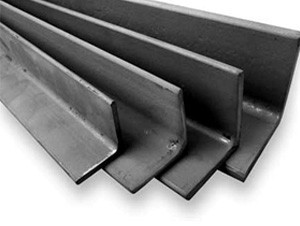
Steel Angles are the most basic type of roll-formed steel. They are formed by bending a single angle in a piece of steel.
Example: They are used in buildings to provide solid frameworks.
es: Ángulo de acero
Steel beam
Noun
Steel beams are metal structures that support large amounts of weight.
Example: Steel bridges have beams to support the stresses and weight of cars.
es: Vigas de acero
Steel channel
Noun
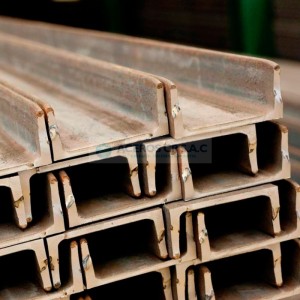
The channel profile or U profile steel is a product made up of ordinary carbon structural steel and ordinary hot-rolled low-disturbance structural steel.
Example: It is used in construction of bridges and other structures.
es: Canal de acero
Steel column
Noun
The steel columns are construction elements that are made in the factory, although occasionally modifications of any kind can be made to them in the field.
Example: The foundations on which the roofs of the schools sit are steel columns.
es: Columna de acero
Steel joist
Noun
The joists are responsible for being a foundation for the upper floors of an enclosure. That is why they are mostly used to support the weight of the concrete and the other elements that go on top of the slab on an upper floor or on the roof of a place.
Example: In the roofs of the courts or public areas we can observe the system of steel joists.
es: Vigueta de acero
Steel member
Noun
Steel members are structural elements capable of large deformations and still resist large forces.
Example: Parts or beams that can generate tension.
es: Miembro de acero
Steel plates
Noun
Steel plate is mainly used for surface applications in some structures, normally the plate is also used for tube manufacturing.
Example: Can be seen in industrial-type structures and surface coatings.
es: Placa de acero
Steel reinforcement
Noun
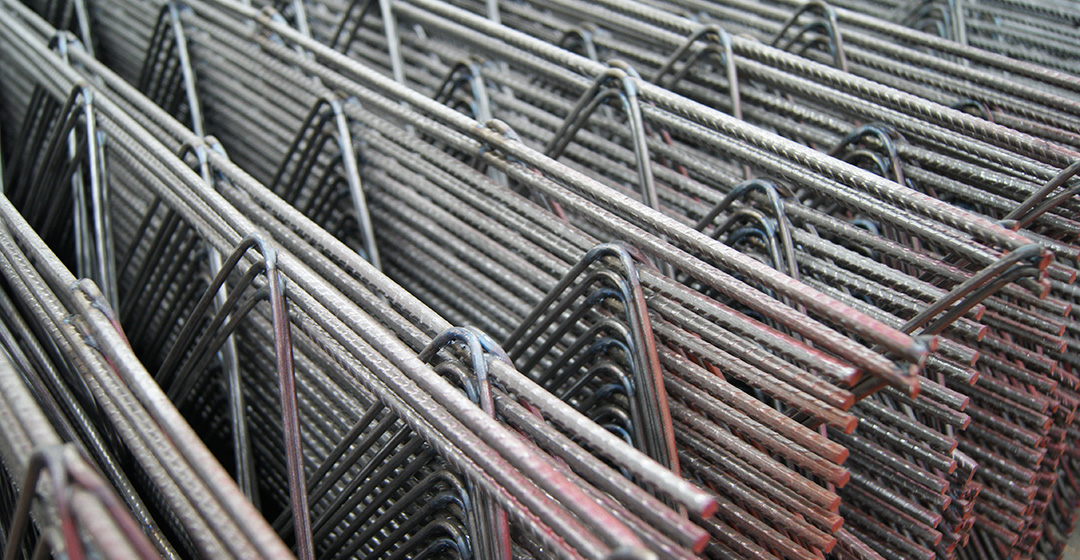
As its name indicates, it is used for the reinforcement of structures and other works that are subject to high loads. The steel is embedded in the concrete so that it can withstand both tension and compression stresses.
Example: Dice, beams and columns have reinforcing steel.
es: Acero de refuerzo
Steel rod
Noun
Long and solid piece of steel, with a smooth surface and circular section.
Example: It is used as reinforcement in concrete reinforcement.
es: Barra de acero
Steel section
Noun
The steel section describes the profile or shape of a structural steel member. Engineers use the section properties for their calculations.
Example: Angle, Slab, Plates, IPR, etc.
es: Steel sections
Supports
Noun
They are devices that restrict in some way the movements of the structural system and allow the transmission of efforts.
Example: The supports of a bridge must be large.
es: Apoyos
Tie (something) back to
Phrasal verb
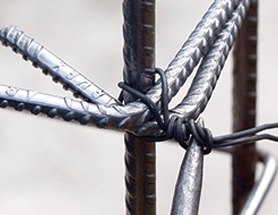
Is when you perform an action in order to get an object to prevent movement with a binding.
Example: In a column, the stirrups must be tied to the rods.
es: Atar (algo) a
Transfers
Verb
Is the action of passing something or someone somewhere
Example: In a construction there are transfers of structural loads.
es: Transferencia
Unreinforced concrete
Noun
Simple and cyclopean concrete comply well with compression forces, but do not behave well with tensile, bending, shear, etc. forces.
Example: This element is used to build different types of structures, such as highways, streets, etc.
es: Concreto sin refuerzo
Urban legibility
Noun
It is when a space or a territory is easy to read, that is to say that it does not have any visual obstruction.
Example: A shopping center is legible to give you the ease of finding what you are looking for, while maintaining order.
es: Legibilidad urbana
Wedge anchor
Noun
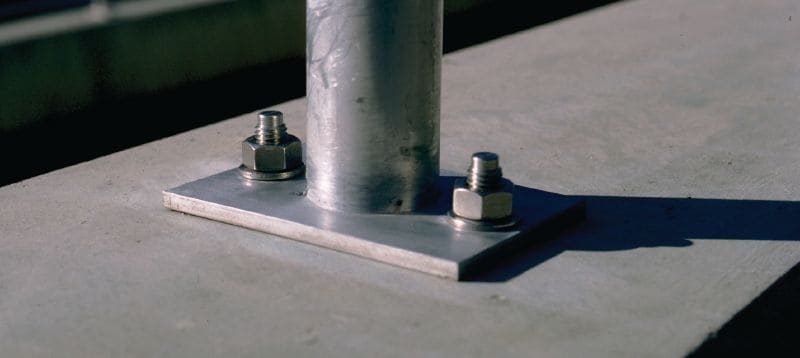
It is a mechanical element that has the purpose of holding or joining two elements with greater resistance and ease.
Example: The anchors support and join the vertical element to the horizontal one